If you’ve ever asked for a new website and gotten a proposal full of vague language, you’re not alone. A lot of business owners hear terms like design, development, UX, wireframes, CMS, and SEO tossed around as if they all mean the same thing. They don’t. Understanding website design and development meaning helps you ask better questions, compare proposals more accurately, and avoid paying for a site that looks decent but underperforms.
For most businesses, this isn’t a technical vocabulary exercise. It’s a budget, sales, and operations issue. If your website is supposed to bring in leads, support hiring, answer customer questions, or help multiple locations show up in search, the difference between design and development matters.
Website design and development meaning, plainly explained
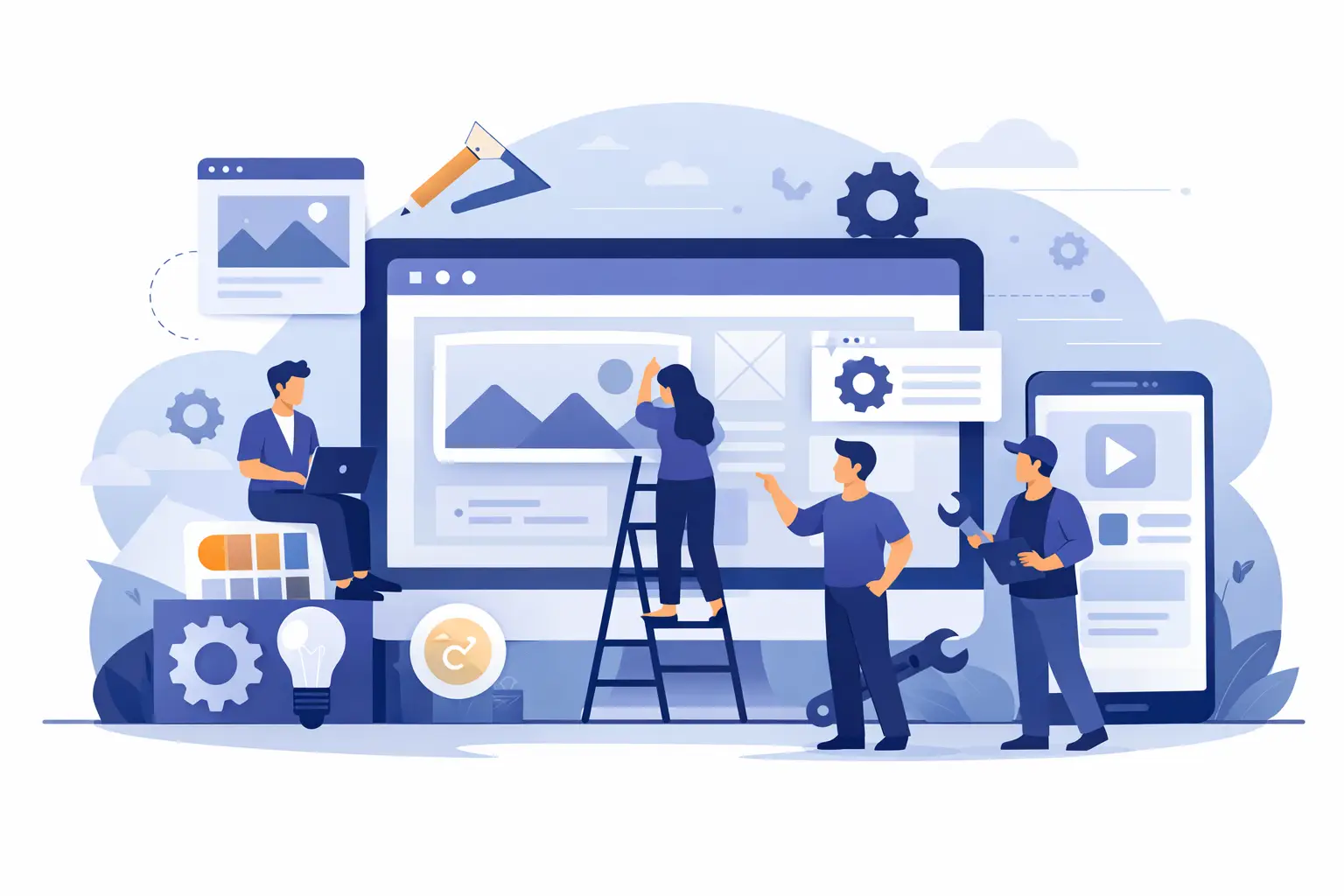
At a practical level, website design and development meaning comes down to this: design is how the site looks, feels, and guides people, while development is how the site is built and made to function.
Website design focuses on user experience, layout, visual hierarchy, branding, messaging presentation, mobile responsiveness from a user perspective, and the path a visitor takes toward an action. Good design answers questions like: Is this page easy to understand? Does it build trust? Can someone find what they need fast? Does the structure support conversions?
Website development is the execution side. It turns plans and visual concepts into a working website. That includes front-end code, back-end systems when needed, integrations, forms, speed optimization, CMS setup, database connections, tracking implementation, and the technical structure that makes the site usable across devices and browsers.
In short, design shapes the experience. Development makes the experience real.
Why business owners often confuse the two
The confusion is understandable because most vendors sell them together. A business owner asks for a website, not a separated list of design tasks and development tasks. So proposals often bundle everything under one label.
That bundling is fine as long as the work is actually being done well. The problem starts when one side gets overemphasized. Some websites are visually polished but weak in speed, SEO structure, or functionality. Others are technically solid but clunky, confusing, and hard to use. Either version can cost you leads.
This is why business owners should care less about buzzwords and more about what each discipline is supposed to accomplish.
What website design actually includes
Design is not just picking colors and fonts. That’s the shallow version. Real website design is part branding, part psychology, and part conversion strategy.
A strong designer thinks about page structure first. What does a first-time visitor need to know in the first few seconds? What objections need to be answered? What should stand out on mobile? Where should proof, trust signals, and calls to action appear?
Design also includes things like navigation structure, content layout, visual consistency, button placement, image selection, readability, and how the site supports your brand position. If you run a law firm, med spa, HVAC company, or multi-location service business, the design choices should reflect how your buyers make decisions in that category.
That’s where business context matters. A restaurant website has different priorities than a behavioral health clinic. An ecommerce product page has a different job than a local roofing service page. Good design is not decoration. It’s decision support.
What website development actually includes
Development is where the website gets built into something functional and maintainable. Depending on the project, that may involve a website platform, custom code, third-party tools, analytics setup, CRM integration, ecommerce configuration, booking functionality, or location-specific page architecture.
This is also where many hidden quality issues show up. A site can look fine on the surface and still have bloated code, poor Core Web Vitals, broken schema, weak form handling, confusing CMS setup, or a structure that makes future updates painful.
Good development considers speed, security, scalability, browser compatibility, accessibility support, and how easy the site will be to manage after launch. If your internal team needs to update service pages or post blogs, that matters. If every edit requires a developer, your site can become a bottleneck.
There’s also a trade-off here. Fully custom development can offer more control, but it may cost more and create more maintenance complexity. Template-based or builder-based development can reduce cost and speed up launch, but it may limit flexibility if the project has unusual requirements. Neither option is automatically better. It depends on your goals, budget, and how the site needs to function over time.
Where design and development overlap
This is where weak projects usually break down. Design and development are different, but they are not separate worlds.
A designer can create a beautiful layout that becomes a mess when translated to mobile. A developer can build a technically clean site that ignores how people actually move through a buying decision. The best websites come from treating design and development as connected disciplines, not handoffs between disconnected people.
Take a contact form as an example. Design affects whether the form feels trustworthy, easy, and worth completing. Development affects whether it works properly, routes submissions correctly, tracks conversions, and integrates with your systems. If either side misses the mark, the business result suffers.
The same goes for site navigation, landing pages, page speed, local SEO pages, and ecommerce checkout flows. These are not just design issues or just development issues. They sit in the overlap.
Website design and development meaning in a business context
If you’re a business owner, the real question is not just what the terms mean. It’s what they mean for performance.
A website is usually expected to do at least one of these jobs: generate leads, support sales, build trust, rank in search, reduce repetitive customer questions, recruit talent, or support multiple channels like paid ads and email. Design and development both affect whether that happens.
For example, if your site is running Google Ads, design affects message match and landing page clarity. Development affects load time, tracking, and form reliability. If you’re focused on SEO, design affects content hierarchy and user engagement. Development affects crawlability, technical structure, mobile performance, and indexing signals.
This is why a cheap website that checks a visual box can still be expensive. If it doesn’t support marketing, it creates extra cost elsewhere.
How to evaluate a website proposal without getting snowed
When reviewing website proposals, don’t stop at the phrase “website design and development.” Ask what that actually includes.
You want clarity on planning, sitemap structure, wireframes or page strategy, copy support, mobile design, CMS setup, technical SEO basics, speed optimization, analytics, form handling, integrations, revisions, launch support, and post-launch ownership. If those items are fuzzy, the proposal is fuzzy.
Also ask who is doing the work. That’s not a small detail. Some firms sell strategy, outsource design, outsource development, and leave the client to coordinate the gaps. That can work, but it often creates delays and accountability problems. If you’re hiring an expert, you want to know whether you’re getting direct execution or a layered process with handoffs.
A practical proposal should explain not just what gets built, but why it’s being built that way.
What a good website process usually looks like
A solid website process starts with business goals, not mockups. Before anyone starts choosing visual styles, they should understand your services, audience, location strategy, lead flow, sales process, and what success looks like.
From there, the project usually moves through structure, messaging, design direction, build, testing, and launch. On simple sites, some of those steps are compressed. On larger or multi-location sites, more planning is needed up front.
The important part is alignment. If the person building your website doesn’t understand how your business gets customers, the final product may be technically complete but commercially weak. That’s one reason many owners get frustrated with generic agency processes. They end up with a website, but not a tool that actually supports growth.
The bottom line on website design and development meaning
Website design and development meaning is simple once you strip away the jargon. Design shapes how people experience your site. Development builds the system that makes that experience work.
Both matter. One without the other creates problems, just different kinds. If you want a website that helps your business rather than just occupying space online, treat design and development as business functions, not just creative and technical tasks.
Before you approve your next website project, ask a tougher question than “How much does it cost?” Ask whether the site is being planned to support how your business actually sells. That’s usually where the good decisions start.