If you are looking for the best website design and development company, you are probably not shopping for a prettier homepage. You are trying to fix something more expensive – weak lead flow, poor conversion rates, outdated credibility, or a site that becomes a problem every time your team needs a simple update.
That is the real issue for most small and mid-sized businesses. A website is not a design trophy. It is a sales tool, a trust signal, and in many cases the hub that every other marketing channel points back to. If it looks good but loads slowly, confuses visitors, or fails to support SEO and paid traffic, it is not doing its job.
What the best website design and development company actually does
A lot of firms sell websites. Far fewer build websites that help a business grow.
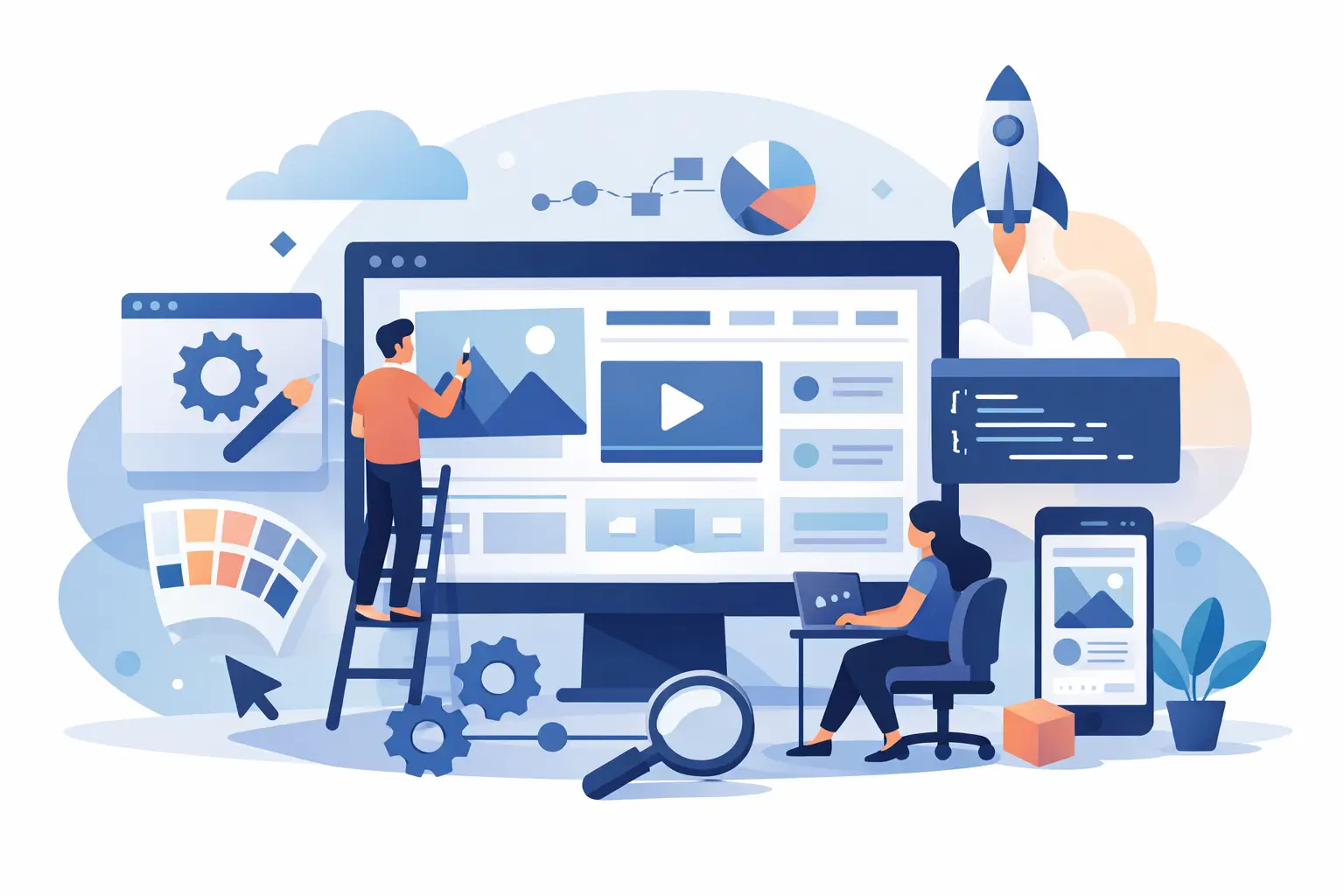
The best website design and development company is not just choosing colors, adding stock photos, and pushing a launch date across the finish line. It should start with business goals, user intent, and conversion strategy. That means understanding how customers find you, what they need to see to trust you, and what action you want them to take next.
For a local service business, that may mean clear service pages, location relevance, fast mobile performance, and forms that actually generate qualified leads. For a multi-location company, it may mean scalable architecture, strong internal page structure, and a site setup that does not create headaches every time a new market is added. For ecommerce, the priorities shift again toward product discovery, checkout flow, and content that supports both search visibility and conversion.
The point is simple. Good web work is contextual. If a company uses the same process and same site structure for every industry, that is a red flag.
Best website design and development company vs. cheapest option
This is where many businesses get burned.
A low-cost provider can absolutely build a functioning website. Sometimes that is enough. If you are a brand-new company with a limited budget and no real traffic yet, a basic site may be a smart short-term move. Not every business needs a custom build on day one.
But cheap websites often create expensive problems later. Pages are built without a content strategy. The backend is messy. SEO basics are skipped. Tracking is incomplete. The design may look acceptable in a mockup but fail in real use on phones, tablets, or slow networks. Then six months later, you are paying someone else to rebuild what should have been done right the first time.
That does not mean the most expensive firm is the answer either. Price alone does not equal expertise. Some agencies charge premium retainers because they carry a large overhead structure, not because the work is better. You may end up paying for layers of project management while the actual build is handed off to junior staff or outsourced contractors.
Business owners usually do better when they ask a more useful question: who is actually doing the work, and how does that work connect to revenue?
What to look for before you hire anyone
The best website partner should be able to explain decisions in plain English. If they hide behind vague language, that is a problem. You should hear a clear process tied to outcomes.
Start with strategy. Ask how they define success. A serious company will ask about lead quality, sales process, customer journey, service lines, market competition, and what your current site is failing to do. If the conversation starts and ends with design preferences, you are not talking to a serious growth partner.
Next, look at structure and usability. A strong website is easy to navigate, easy to scan, and built for real users who are trying to solve a problem quickly. That matters even more for local and regional businesses, where visitors often arrive with immediate intent. They want to know what you do, where you work, why they should trust you, and how to contact you without friction.
Development quality matters just as much. The site should load fast, work across devices, support analytics, and be easy to maintain. You should not need a developer every time you want to update a service description or publish a new piece of content. If your website becomes a bottleneck, it will not support marketing for long.
Then there is search performance. A website company does not need to promise rankings to understand SEO. But it should build a site that gives SEO a real chance. Clean page hierarchy, strong metadata structure, sensible internal linking, crawlability, local page strategy, and content-ready templates should be part of the build. Otherwise, your SEO campaign starts with technical debt.
The questions smart business owners ask
You do not need to be technical to vet a website company. You just need to ask direct questions.
Ask who will actually handle strategy, design, development, and launch. Ask what platform they recommend and why. Ask how they approach mobile experience. Ask what happens after launch if something breaks. Ask whether content is included, whether they handle redirects, whether tracking is installed properly, and whether they build with future marketing in mind.
Also ask for examples that are relevant to your type of business. A company may have beautiful work for lifestyle brands and still be the wrong fit for a contractor, healthcare group, restaurant group, or dealership. Industry context changes the right answer.
A good partner will also talk honestly about trade-offs. Template-based builds can save money and time. Custom builds can offer more flexibility. WordPress may make sense for one business, while a different platform may be better for another. There is no universal best setup. There is only the best fit for your budget, team, and growth plan.
Why direct expertise often beats the traditional agency model
This is the part a lot of owners learn after wasting money.
Traditional agencies often separate sales, strategy, account management, design, development, and support. On paper, that can sound organized. In practice, it often creates delay, miscommunication, and cost inflation. You explain your business to the salesperson, then again to the account manager, then again to the team doing the actual work.
That layered model is not automatically bad. Some larger organizations need it. But many local and regional businesses do not. They need speed, clarity, and senior judgment. They need someone who can assess the site, understand the market, and make smart decisions without turning every revision into a meeting.
That is why many companies are moving toward direct-to-expert models. When the strategist is also close to execution, the work tends to be tighter, faster, and more accountable. You get fewer handoff problems and a much clearer line between recommendation and implementation.
For businesses that are tired of agency overhead, that difference matters. It is one reason consultants like Aaron J. Scheetz often make more sense than a bloated shop with layers of markup and limited transparency.
Signs you found the best website design and development company for your business
You will usually know by how they think, not by how they pitch.
The right company will challenge weak assumptions. It will ask about your customers before talking about homepage animations. It will care about site architecture, lead flow, messaging, local visibility, and long-term usability. It will not sell you features you do not need just to increase project scope.
It will also be realistic. If your offer is unclear, a new website alone will not fix that. If your sales process is broken, design will not solve it. If your traffic is weak, conversion improvements may help but they will not create demand from nowhere. Serious professionals say that out loud.
That honesty is usually a better sign than a polished sales deck.
Choosing the best website design and development company without overbuying
Most businesses do not need the flashiest site in their market. They need a site that is credible, fast, clear, easy to manage, and built to support the rest of their marketing.
So when you evaluate options, do not focus only on visuals. Focus on business fit. Can this partner build a site that helps your team sell, supports search and advertising, and gives customers a clear path to action? Can they explain what matters and what does not? Can they deliver without the drag of bloated process and unnecessary cost?
That is the standard worth using.
A website should make your marketing easier, not more complicated. If the company you are considering understands that, you are already asking the right question.