A lot of business owners have already paid for a website twice. First for the build, then again to fix what the first version failed to do.
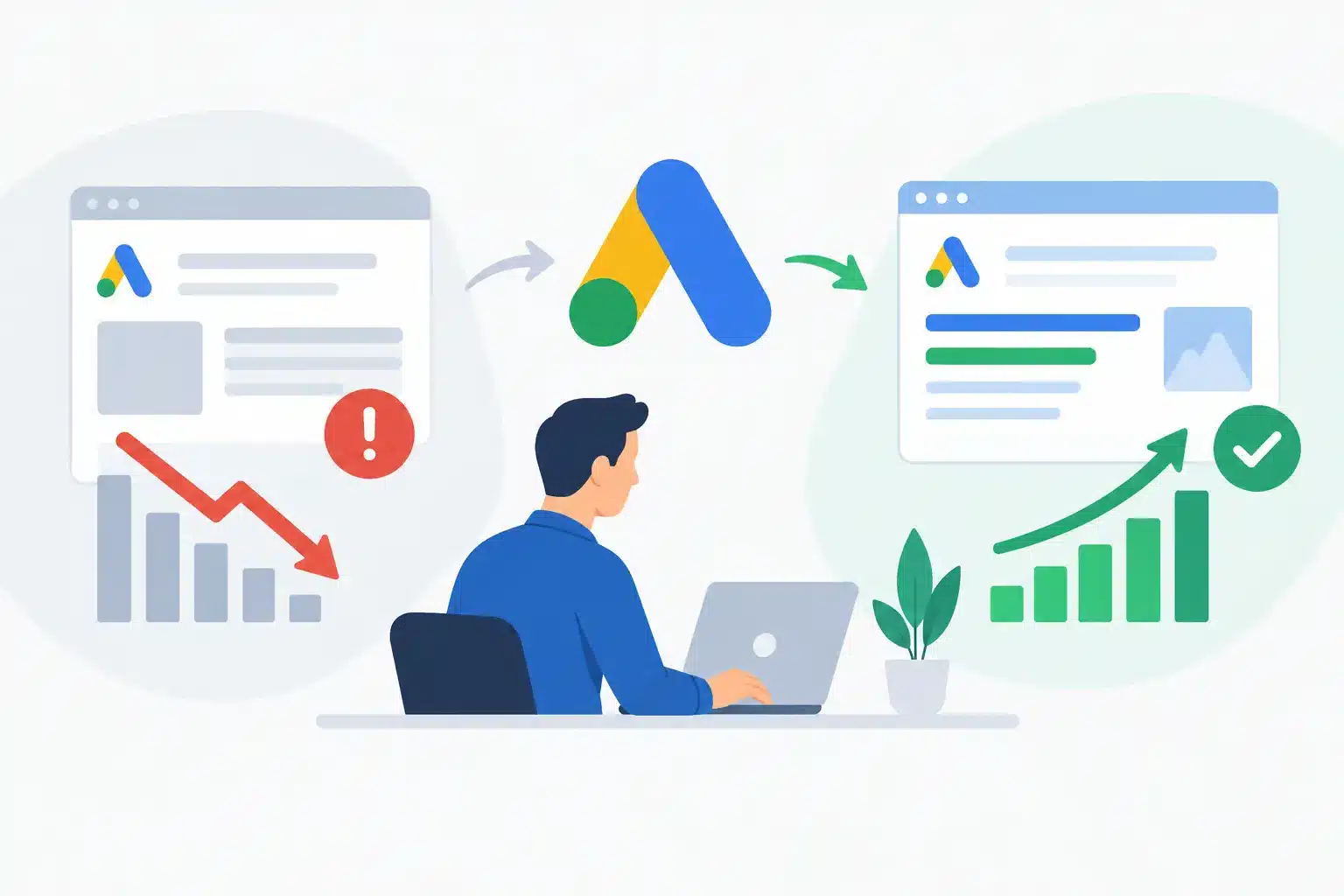
That is the real issue with website design and development services. The problem usually is not that the site looked bad. It is that it did not support the business. It did not rank, convert, load fast enough, explain the offer clearly, or make it easy for the right customer to take the next step.
If you run a local or regional business, your website is not a branding exercise. It is part sales tool, part credibility check, and part operational asset. It should help your marketing work better across SEO, paid ads, email, social, and referral traffic. If it does not, you do not have a website investment. You have a digital brochure with a monthly bill attached.
What website design and development services should actually do
Too many providers treat design and development like separate boxes. One side makes it look polished. The other side makes it function. The business is left to hope the finished product somehow produces leads.
That is backwards.
Good website design starts with business intent. Are you trying to generate calls for a home services company? Book appointments for a medical or mental health practice? Support multiple locations? Improve close rates for higher-ticket consulting or specialty services? Sell online while also supporting in-store traffic? Those are different jobs, and the site structure should reflect that from day one.
Development matters just as much. A slow site, a messy backend, or a page template that breaks every time someone updates content will create problems long after launch. Clean builds, sensible page architecture, mobile performance, conversion tracking, form handling, and basic SEO readiness are not extras. They are baseline requirements.
The best website design and development services connect strategy, user experience, and technical execution. That is where most cheap builds fall apart. They can produce pages. They cannot always produce outcomes.
Why business owners get frustrated with website projects
If you have been through a bloated agency process before, the complaints are usually predictable. Too many meetings. Too many handoffs. Too much vague language. Not enough progress.
One person sells the project. Another manages the account. A freelancer somewhere else handles development. Someone junior writes the copy. Then everyone acts surprised when the finished site feels disconnected from how the business actually operates.
This is why direct access to the person doing the work matters. It reduces translation errors. It speeds up decisions. It keeps strategy tied to execution.
It also helps avoid another common mistake – building a site based on internal preferences instead of customer behavior. Owners often know their business well but still need an outside expert to challenge weak messaging, unnecessary pages, poor navigation choices, or calls to action that are too soft.
A website should not be a committee project. It should be built around what moves a prospect from interest to action.
Website design and development services are not one-size-fits-all
A local service business does not need the same site as a multi-location brand. A dealership has different needs than a therapy practice. An ecommerce business has different friction points than a contractor trying to increase quote requests.
That sounds obvious, but many providers still use the same process for everyone. Same page structure. Same design logic. Same recycled content framework. The result is a site that technically exists but does not fit the buying process.
For example, a home services company may need stronger service area pages, call-focused mobile design, trust signals above the fold, and faster paths to estimates. A medical practice may need clearer provider information, treatment-specific landing pages, compliance-aware forms, and a calmer user experience. A restaurant may care more about menu access, location details, reservations, and mobile speed than long-form copy.
This is where strategy earns its keep. The right build depends on traffic sources, customer behavior, sales cycle, and internal capacity. Sometimes a business needs a fully custom approach. Sometimes it needs a leaner rebuild that fixes the biggest conversion problems without overcomplicating things.
It depends on the business, not the trend.
What to look for in website design and development services
First, look for clarity around outcomes. If a provider cannot explain how the site will support lead generation, sales, recruiting, local visibility, or customer trust, that is a warning sign. Pretty mockups are easy to sell. Business performance is harder.
Second, ask how strategy is handled before design starts. There should be real thinking around audience, competitors, messaging, page hierarchy, offers, and conversion paths. If the process jumps straight to colors and layout, you are probably paying to decorate a weak foundation.
Third, ask who is actually doing the work. This matters more than most proposals admit. Senior-level strategy combined with hands-on execution usually produces better outcomes than layered teams with too many handoffs.
Fourth, look at how the site will function after launch. Can your team update it without breaking things? Is it built with sensible templates? Are forms, calls, analytics, and SEO basics set up correctly? A launch is not the finish line if the backend becomes a problem the minute real marketing starts.
Finally, ask how success will be measured. Traffic alone is not enough. Rankings alone are not enough. You want to know whether the site is improving calls, form fills, booked appointments, quote requests, purchases, or some other meaningful business action.
Design matters, but not the way most people think
Design absolutely affects trust. If your site looks dated, cluttered, or hard to use, prospects notice fast. In many industries, they may never say it out loud, but they will assume the business behind the site operates the same way.
Still, design is not mainly about making something look modern. It is about making decision-making easier.
Good design clarifies the offer. It guides attention. It removes hesitation. It supports mobile behavior. It makes pricing, service categories, next steps, reviews, and proof points easier to process.
Sometimes that means a cleaner visual system. Sometimes it means stronger copy and simpler navigation. Sometimes it means cutting pages, not adding them. More content does not automatically mean better performance.
There is always a trade-off. A highly custom design may feel more distinctive, but it can also increase cost, development time, and maintenance complexity. A more streamlined approach may launch faster and support marketing better, even if it is less flashy. Smart businesses make that decision based on goals, timeline, and budget, not ego.
Development is where performance gets won or lost
A website can look great in a presentation and still perform poorly in the real world.
Development is what determines whether pages load quickly, layouts hold up on mobile, forms work consistently, tracking captures real conversions, and search engines can crawl the site cleanly. It also affects accessibility, security, and long-term ease of use.
This is why shortcuts often cost more later. Bloated themes, plugin overload, poor image handling, fragile templates, and confusing admin setups create friction your team will keep paying for. Sometimes that cost shows up in slower SEO growth. Sometimes it shows up in lower ad conversion rates. Sometimes it shows up when no one wants to touch the site because every update feels risky.
A better approach is straightforward. Build only what the business needs. Keep the structure clean. Make the site easy to manage. Prioritize speed, mobile usability, and conversion tracking from the start.
That may not sound flashy, but it is what helps the rest of your marketing work.
The smartest website projects do not start with design
They start with questions.
What is the business trying to improve over the next 12 months? Where are leads coming from now? What is breaking in the current customer journey? Which pages matter most? What objections keep slowing down sales? Which service lines deserve more visibility? What content is missing for search or paid traffic to convert?
Those questions produce better websites than any mood board ever will.
For many businesses, the right move is not a full rebuild. It may be a strategic overhaul of messaging, page structure, calls to action, or technical setup. For others, the current site is so limited that rebuilding is the smarter financial decision.
That is where a practical advisor matters. You want someone who can tell you when a smaller fix is enough and when it is time to stop patching a bad system. That kind of honesty is worth more than a polished pitch deck.
Aaron J. Scheetz works with businesses that need that level of direct, practical execution – not another layer of agency process.
If you are evaluating website design and development services, keep one standard in mind. The site should make it easier for the right customer to trust you, understand you, and contact you. If it does not do that, it is not finished, no matter how good it looks on launch day.
A good website should reduce friction every month it is live. That is the bar worth paying for.